Key takeaways
- In August 2026, cameras hidden inside devices that looked like motion sensors were found in the treatment rooms of an Istanbul beauty centre; three suspects were arrested, the investigation is ongoing and they deny the accusations.
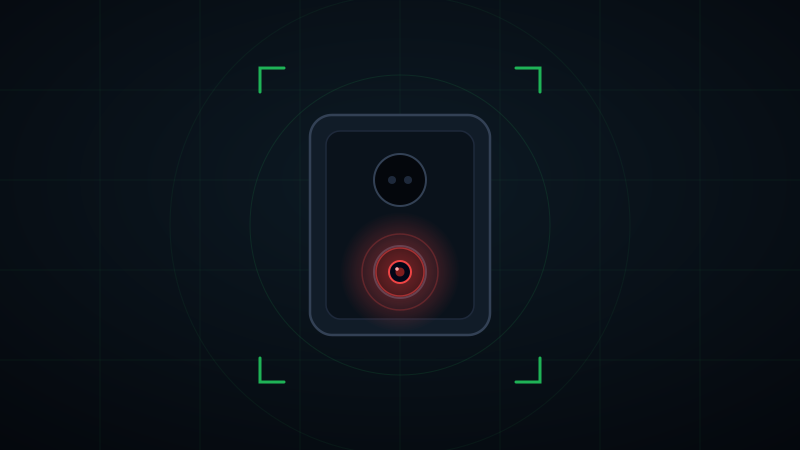
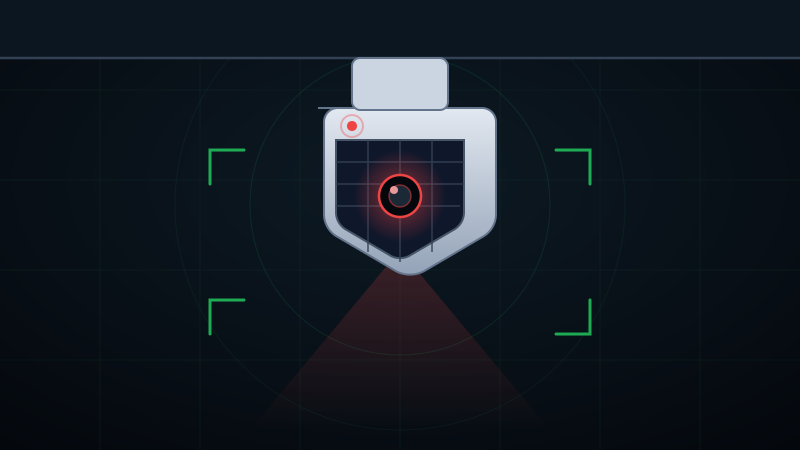
- A PIR motion sensor is an ideal shell for a camera: it sits high on the wall, sees the whole room, has permanent power, and nobody looks at it twice.
- What set this case apart was not the technology but the organisation: installation, venue and distribution were separate roles — surveillance had become a service.
The case that surfaced in Istanbul in August 2026 showed that hidden cameras are rarely the work of one lone voyeur: according to the allegations, one person installed the devices, another provided the premises and a third sold the footage. The account below is based on Turkish press reports published between 29 and 31 August 2026; the investigation is ongoing and the suspects deny the accusations.
What has been reported
Three suspects were arrested in the investigation run by the Bakırköy Chief Public Prosecutor's Office, and the Ministry of Health suspended the centre's operations. According to press reports:
- The cameras were placed inside white devices that looked like motion sensors in the treatment rooms.
- Seven devices containing hidden camera hardware were seized during the search of the premises.
- The footage was being sold to subscribers through a Telegram channel.
- The archive under examination held roughly 15,000 images, and not all of them came from that one centre.
- Those arrested include the person who installed the camera system, the manager of the centre and the channel operator.
Why the camera was inside a motion sensor
A PIR motion sensor is close to a perfect disguise. It sits high on the wall, its white plastic housing looks ordinary in any room, and nobody gives it a second glance. Better still, the two things a camera needs are already there: permanent power and a viewing angle that covers the whole room.
- The housing is opaque and patterned, so a lens disappears behind the surface.
- Mounted high on the wall, it sees the entire room.
- It is wired to mains power, so battery life is never a problem.
- A building already contains dozens of them; one more draws no attention.
The real issue: surveillance became a service
What sets this case apart is not the technology but the organisation behind it. The allegations describe a division of labour: someone to install the rig, someone to open the door, and someone to sell the footage to subscribers. That turns a hidden camera from one person's perversion into a business with recurring income. According to press reports, one suspect told the court his monthly income was one million lira.
The archive supports that reading. Reports say the same collection also held recordings from clothing store fitting rooms, hotel rooms, bungalows and short-term rental apartments. The risk does not belong to one salon; every room where people undress is on the same list.
A 60-second check in any room where you undress
Spotting a rig like this is a habit, not detective work. When you walk into a treatment room, a fitting room or a hotel room, follow this order:
- Look at the wall directly facing the bed or the spot where you undress: motion sensor, smoke detector, clock, speaker.
- Turn the lights off and sweep the room with your phone camera; lenses come back as a small bright dot.
- Question the device's angle: a real motion sensor watches the door, not the treatment table.
- Scan the venue's wireless network; camera modules often show up under their own brand name.
- Fresh screw marks, an LED that never goes out or a warm housing all deserve suspicion.
If you think you were recorded
If a device looks wrong, do not try to open it. You would damage the evidence and weaken any later investigation.
- Photograph both the device and the room without touching anything.
- Leave the room and report it to the police so your complaint is formally recorded.
- Ask the business in writing to preserve its camera and entry records.
- Note your appointment time, the room or cabin number and anyone who was with you.
- You can also notify the data protection authority in your country.
Frequently asked questions
What happened in the Istanbul beauty centre case?
According to Turkish press reports from 29-31 August 2026, cameras hidden inside devices that looked like PIR motion sensors were found in the treatment rooms of a beauty centre in Bakırköy; three suspects were arrested and the centre was shut down by the Health Ministry. The footage was reportedly sold through a Telegram channel, and the seized archive is said to contain material from other venues as well. The investigation is ongoing and the suspects deny the accusations.
Can I check a salon or fitting room myself?
Yes, and it takes under a minute. Look at everything mounted high on the wall or ceiling that faces the treatment table or the changing area — motion sensors, air fresheners, speakers, clocks — and run a Wi-Fi and Bluetooth scan to see what is transmitting in the room.
What should I do if I think a business is filming me?
Do not touch or remove the device: photograph it in place, film the room so the position can be proved, and leave. Report it to the police straight away — in most countries recording someone in a private space is a criminal offence, and evidence handled by police carries weight that a phone video passed around later does not.